The alarm woke me up at around six hours of sleep, half asleep I spooned some Harischandra into the mocha pot, the one that’s already burnt and stained after just a couple of months of hardcore daily use. Outside it was still dark, the kind of morning where the city hasn’t quite decided whether it’s awake yet.
While it brewed I sat in front of my laptop going through the slides I’d made, checking for grammar and punctuation issues, which would’ve been embarrassing if there were any, the whole session being run by an English education company. The first slide read ආ-yo! ෙබයෝවන්!, my own twist on ayubowan, a little more street. I’m Dave, it said underneath. Everything checked out. Satisfied, I sipped the coffee, wondering what it would taste like with sugar again. The last bit was bitter. I drank it anyway, hoping the caffeine would do its job.
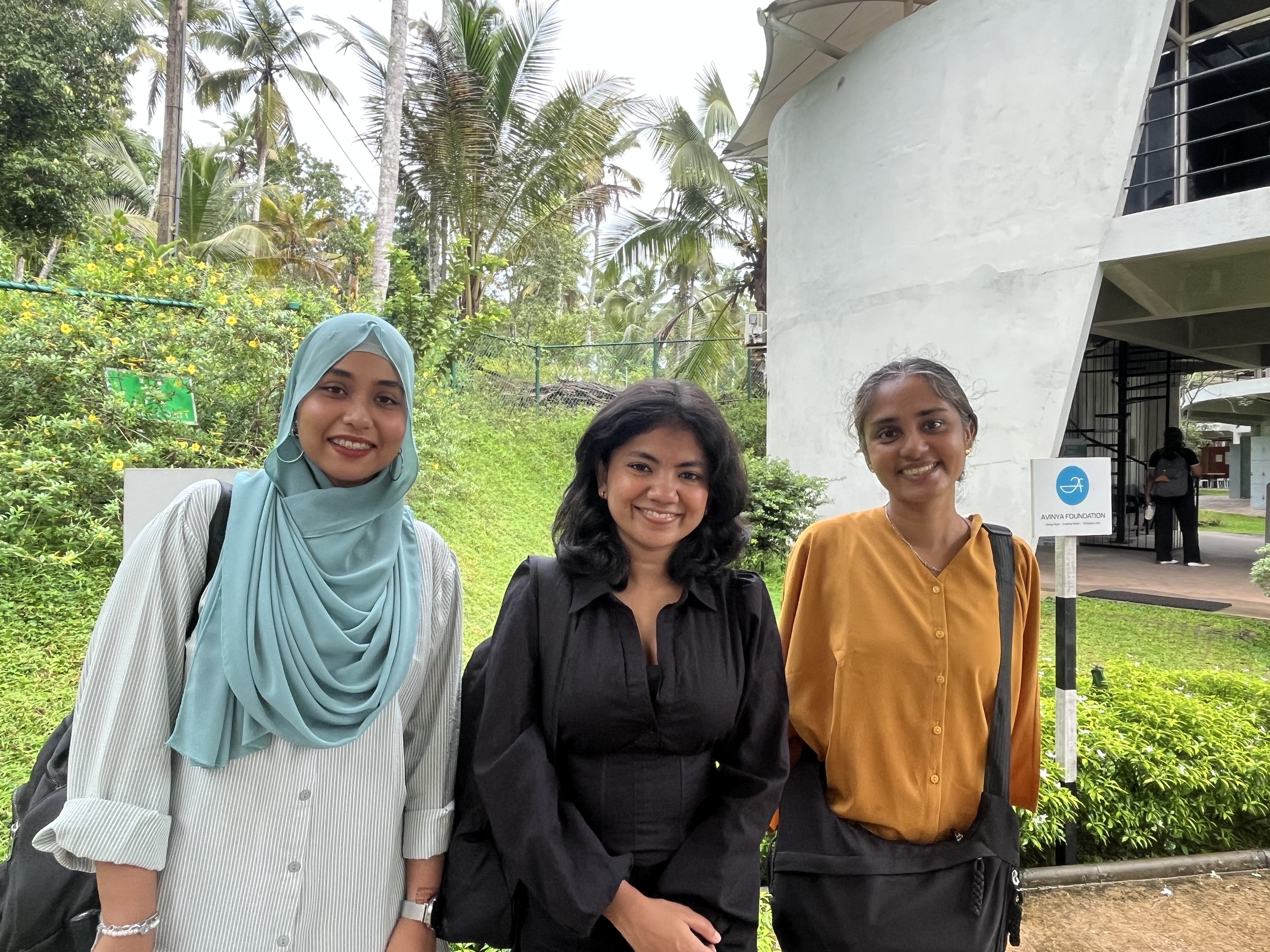
The rain started to pour. On my way, I texted, getting dressed and ordering an Uber to Barista. It doesn’t open till 8am, so by the time I got there, Amelia and Esther from the moderator team, and Kiya from the core team, were already outside, sitting at the tables where the rain wasn’t reaching, the shutters still down behind them. Kiya had recently been hired to lead content, and this was her first time meeting the others in person. The rest of the JE team was in Weligama that same weekend, on the first day of our first corporate project, so it felt like the whole company was scattered across the island doing something for the first time.
The good people at Avinya had arranged transport for all of us, a mini cab pre booked, the driver already waiting when we got there. We piled in and started the hour long ride.
On the way we introduced ourselves properly. Amelia had been working at JE remotely for over a year but this was the first time we’d actually met. Esther had just finished her first batch as a moderator. Kiya was a couple of weeks in. Somewhere along the way we stopped to pick up Ruwanthika, an educator at Avinya, and the rain kept getting heavier, the roads narrowing as fields opened up on either side.
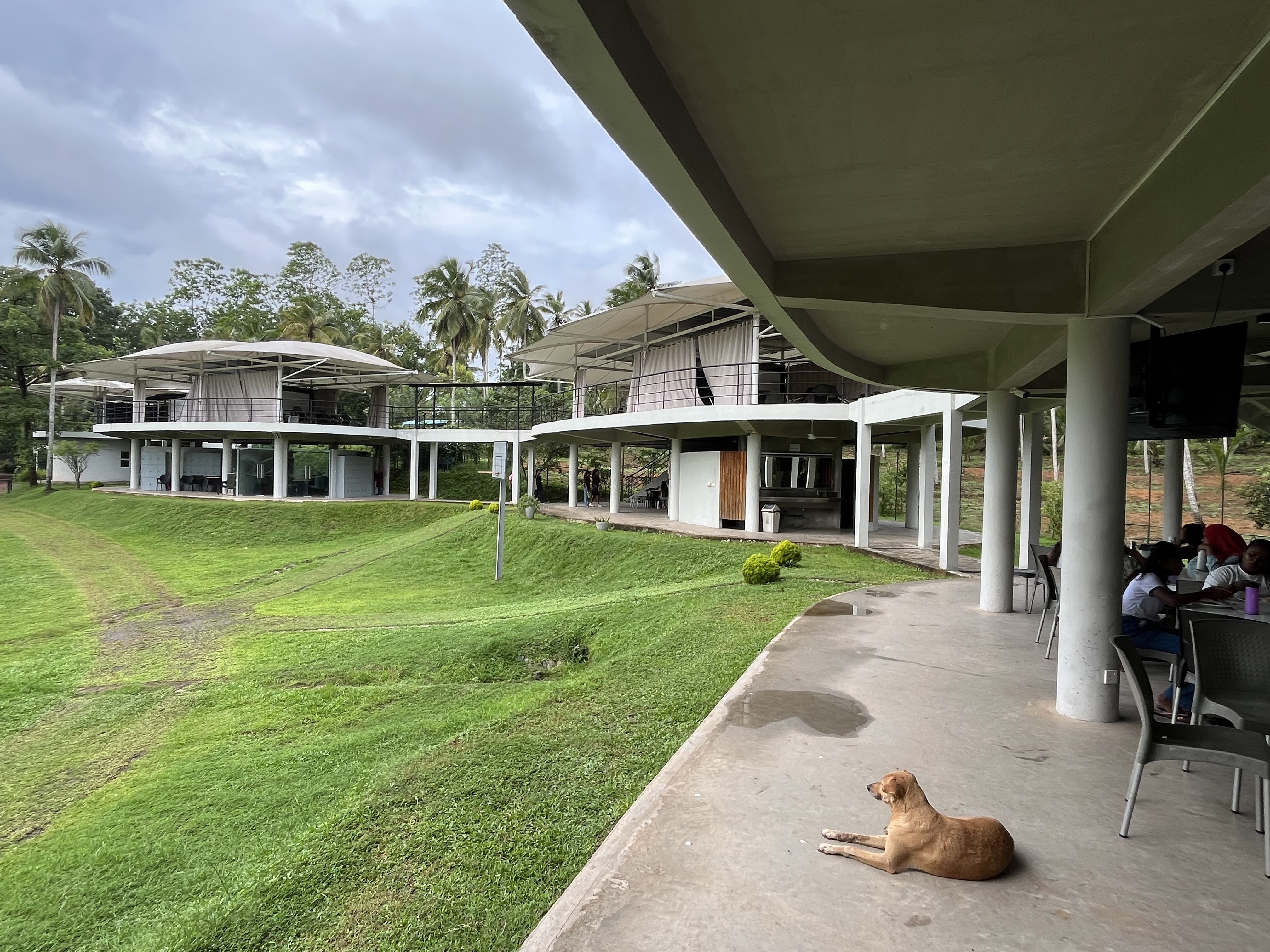
The Avinya campus looked like something out of a science fiction film. White buildings with streaks of green, a swamp somewhere nearby, the whole place feeling slightly out of place against the rural landscape around it. We sat down to parippu and paan, the Sri Lankan staple, and talked with Ruwanthika and the rest of the team about how things ran at Avinya and what to expect from the session.
I’d done fewer than five guest speaker sessions before this, being a startup founder, and I still wasn’t entirely sure how these things worked. Do you ask people to invite you? Do you just post enough on social media that they come find you? I wasn’t sure. But this one felt different from the usual networking tech talks. It felt like it mattered.
Avinya was started by Sanjiva, someone the entire Sri Lankan tech industry looks up to as a pioneer. The foundation takes in students aged 17 to 22 who’ve left the traditional education system behind, the ones who didn’t pass their O Levels or A Levels, and runs them through a program that prepares them for employment. Leading corporates across the country end up hiring graduates from it. English is a core part of what they teach, which is why they’d invited us to run a session on it.
I’d met Sanjiva a couple of months earlier, and like most things in my life, it happened by accident. I was doomscrolling LinkedIn one night and the first thing that loaded was a post from him offering fifteen minute in person chats to anyone who wanted to talk. I booked the earliest slot I could find.
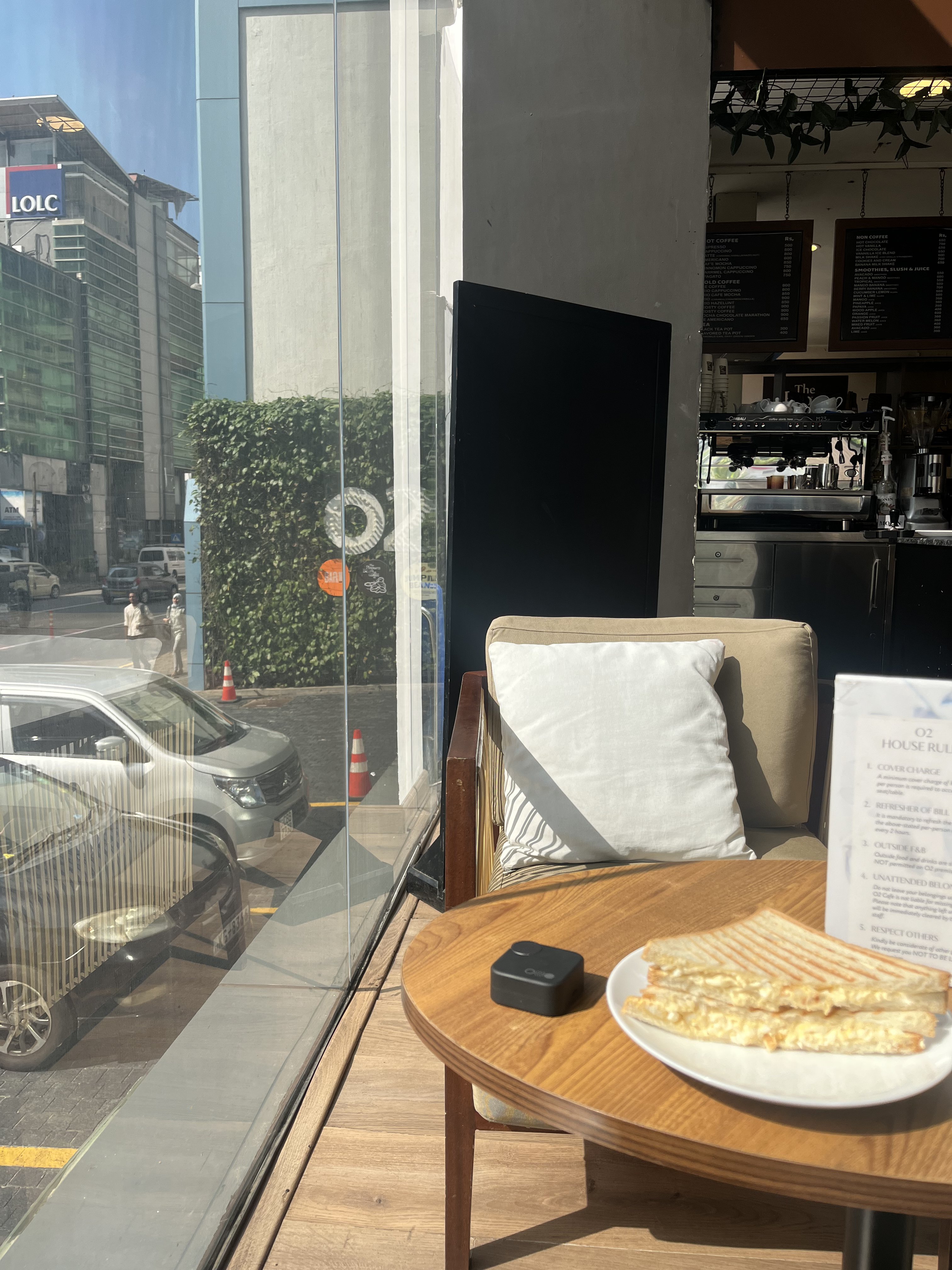
I got to The Brown Bean Coffee Shop at WSO2 fifteen minutes early and saw him already talking to someone else, someone who’d apparently booked the slot before mine. I was thirty minutes early. I sat in the corner and waited, watching, expecting the next person to walk in any minute. Fifteen minutes later, still no one. I finally walked up. “Hi Mr Sanjiva, I’m Dilina, I’m supposed to be here at 8am but I came a bit early.” I shook his hand, told him there’d been someone before me. “Have a seat,” he said. “He probably won’t show up.”
I’d never met him before but knew what he meant to the industry. My observation skills were at their sharpest, sitting across from him. A WSO2 t-shirt, a black SpaceX backpack, and what looked like one of the mini iPhones, the smaller version of the base models Apple makes. Doesn’t that run out of battery fast, I wondered, before catching myself.
I knew my time was limited so I got straight to it. I asked him how he built his team, what made people stay so long. I’d met a few people from WSO2 before, some whose companies had been acquired by it, some who’d been there for almost two decades, and I wanted to know what that was built on. He talked about treating people well, equity, looking after them, keeping the culture flat. I was trying to build a team from scratch again at the time, trying to be a better leader to my own people, and everything he said landed somewhere useful.
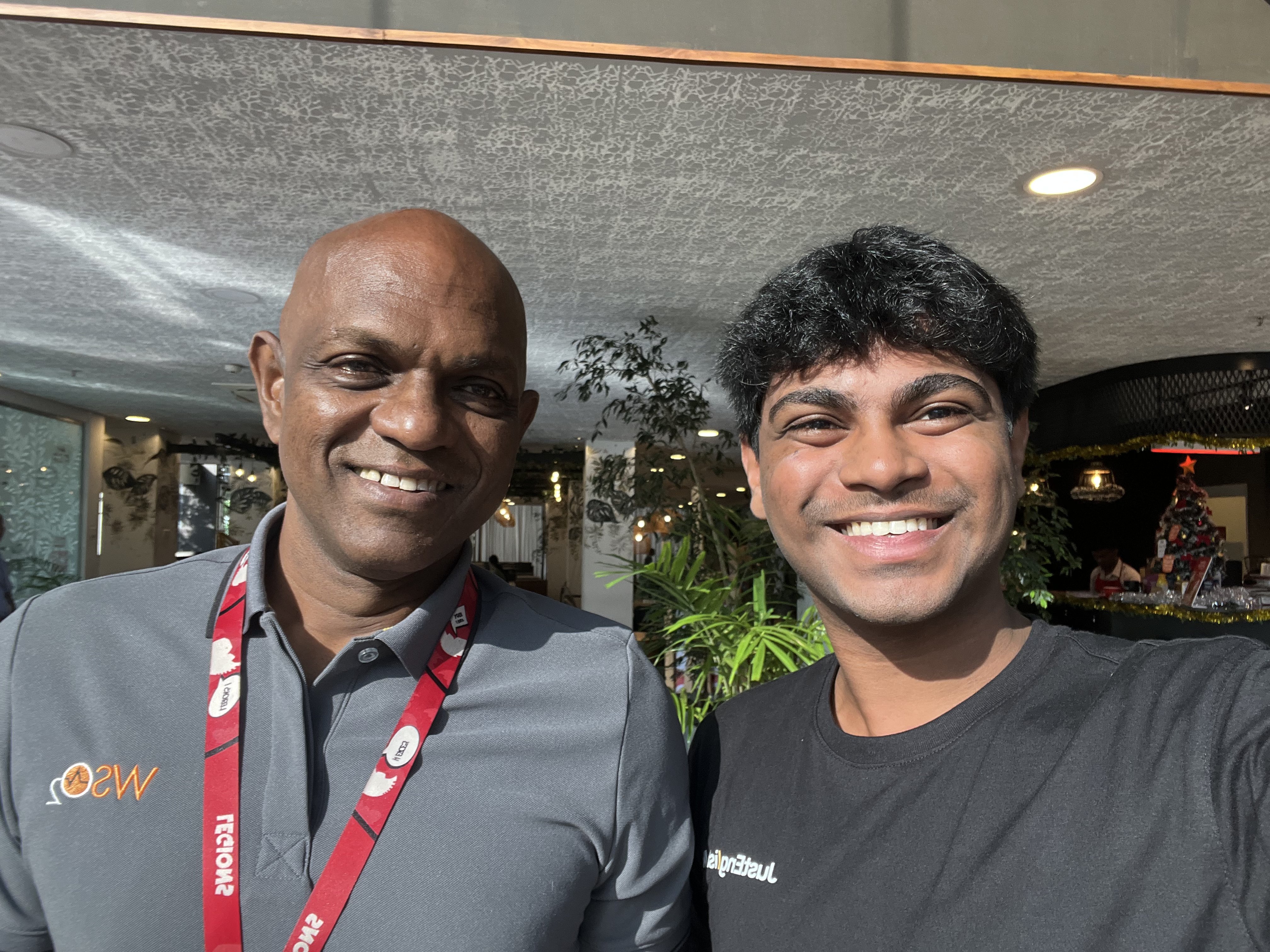
Four years before that, at seventeen, wanting to drop out of high school and looking for tech companies to fund my degree, I’d cold messaged a list of people. Sanjiva was one of them. He left it on read. And before that, without knowing it, I’d contributed to one of his open source projects at the Lanka Software Foundation, a Red Cross project called Elixir, also at seventeen. Three points in a line I never planned, and now I was a few years older, standing in a building he’d built for kids who reminded me of who I used to be.
The session started with my second slide. Podi story ekak, it said. A small story.
I told them how I landed my first job by cold messaging a founder on LinkedIn, how English, not any technical skill, was what got me through the door at seventeen, and how I ended up moving to Colombo on my own because of it. I told them about my coworkers, how Sinhala was the default in that office, but I wanted to speak English, so I just did, in meetings and everywhere else. I didn’t think much of it at the time. But once I started, the room would shift into English too, and the more senior staff, people who’d been there far longer than me, weren’t as comfortable with that. They’d get stuck, stumbling through a language they hadn’t planned on using that day. Looking back, they were probably pissed off, maybe even resented me a little, all because a seventeen year old intern just wanted to speak English and didn’t think about what that meant for everyone else in the room.
That job didn’t last. I wasn’t rehired after the internship, for reasons I never fully understood. But a friend I’d met at a networking session asked if I could teach him English online for Rs. 5000 a month. That turned into a handful of students, then a tiny startup, then JustEnglish.
I told them about kadda. In Sinhala, kaduwa means sword, and kadda is the shortened version people actually use. For decades it’s been used to describe English itself, a language some people wielded to cut others down, to draw a line between who belonged in a room and who didn’t. Kadda danawa, someone using English like a weapon. I first explained this on a podcast episode with Eloise, and I wanted these students to hear it too, not as a warning, but as a reframe. My theory has always been that if you want to learn something, do something, talk to someone, English is often the thing that gets you there. That’s what we’ve been trying to do at JE.
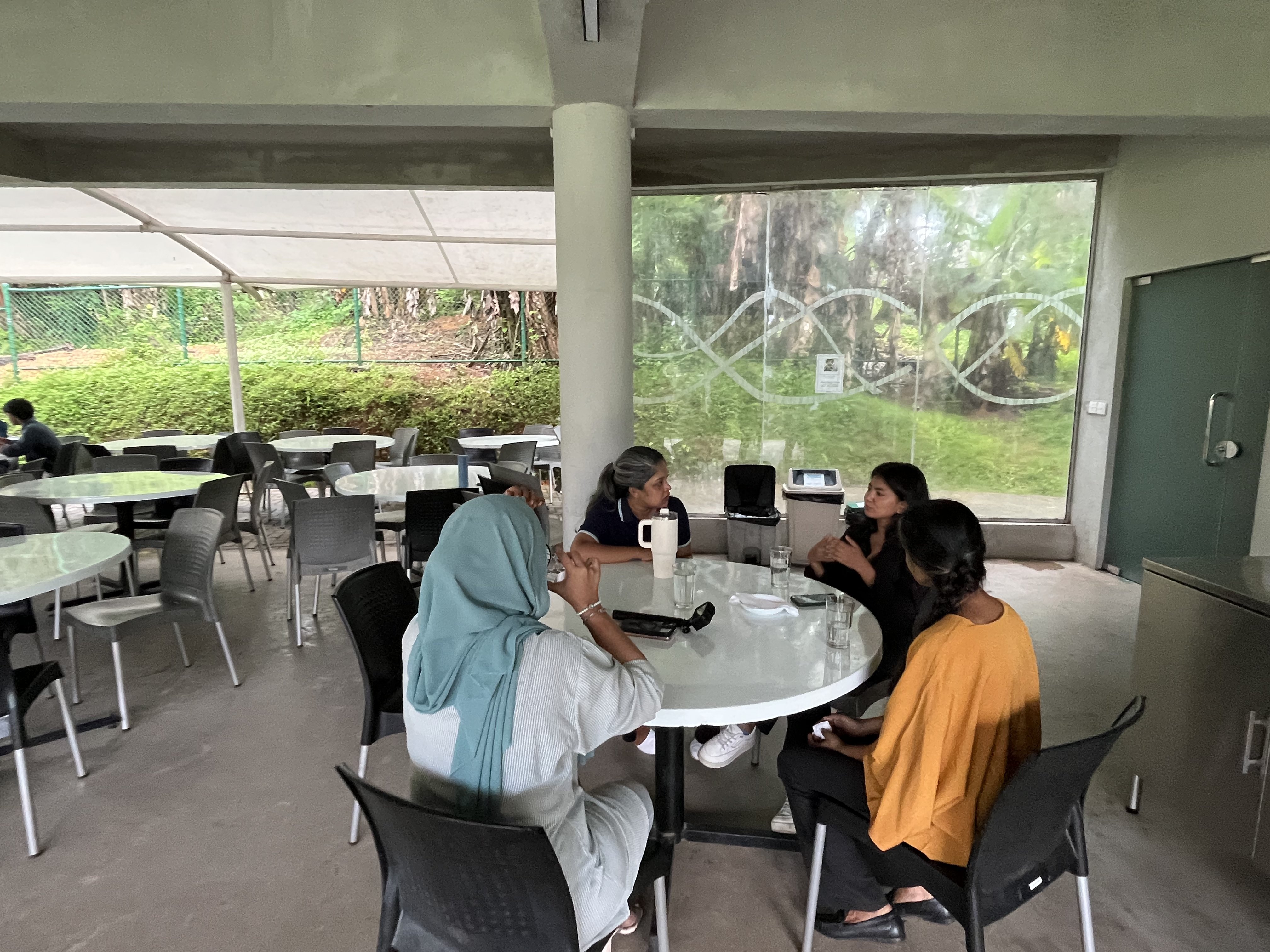
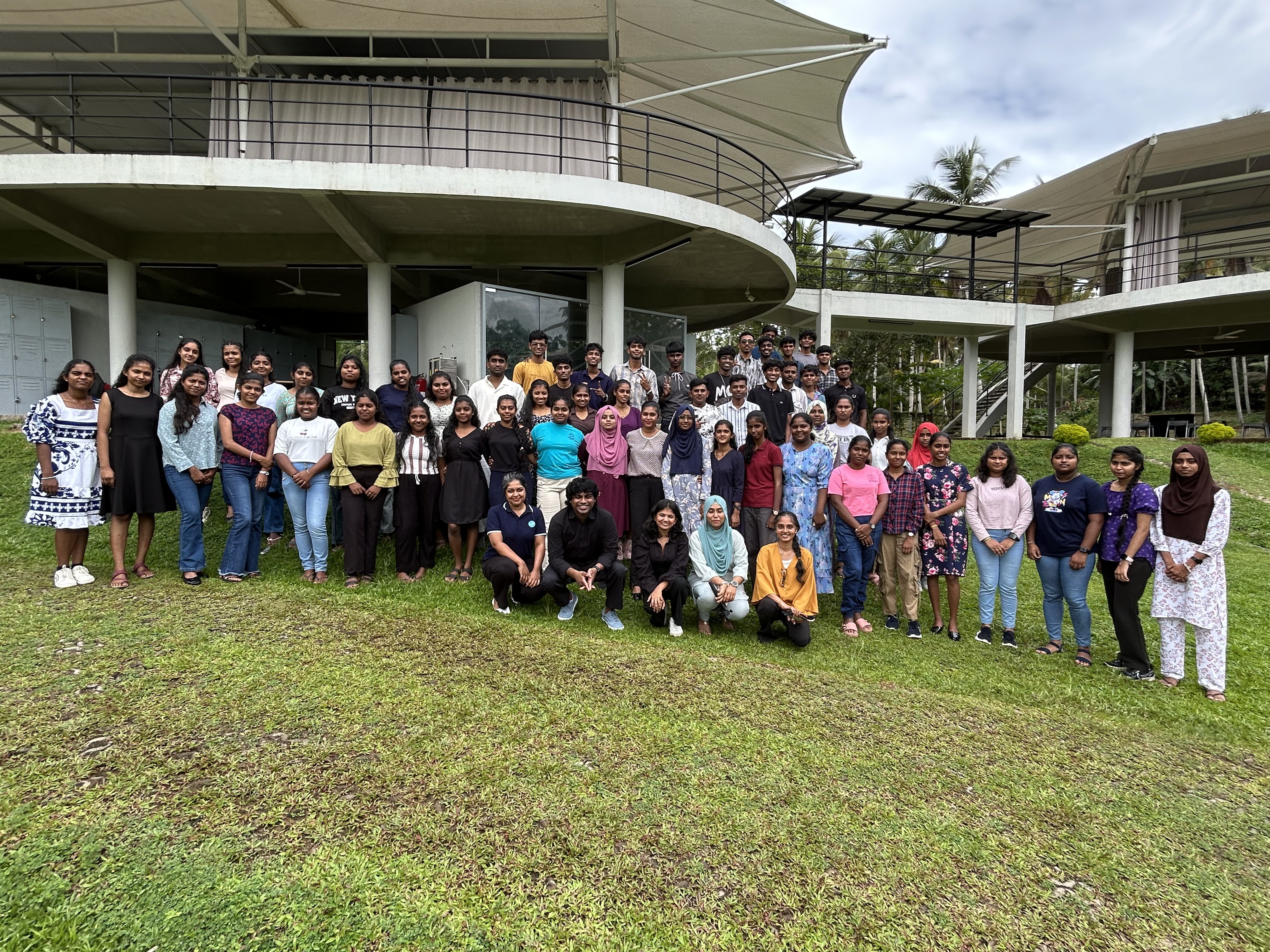
After my part, Amelia and Esther took over and completely lit up the room. First was a sales pitch activity, students working in groups to sell everyday objects, a toothbrush, a comb that supposedly did six things. They were brilliant at it, more confident than I expected. Then came the alter ego activity, the same one we run internally at JE, where everyone picks an anonymous persona and answers questions as that person. The room lost it. Students became local scandalous celebrities, politicians, even each other’s friends, and every answer set off another wave of laughter.
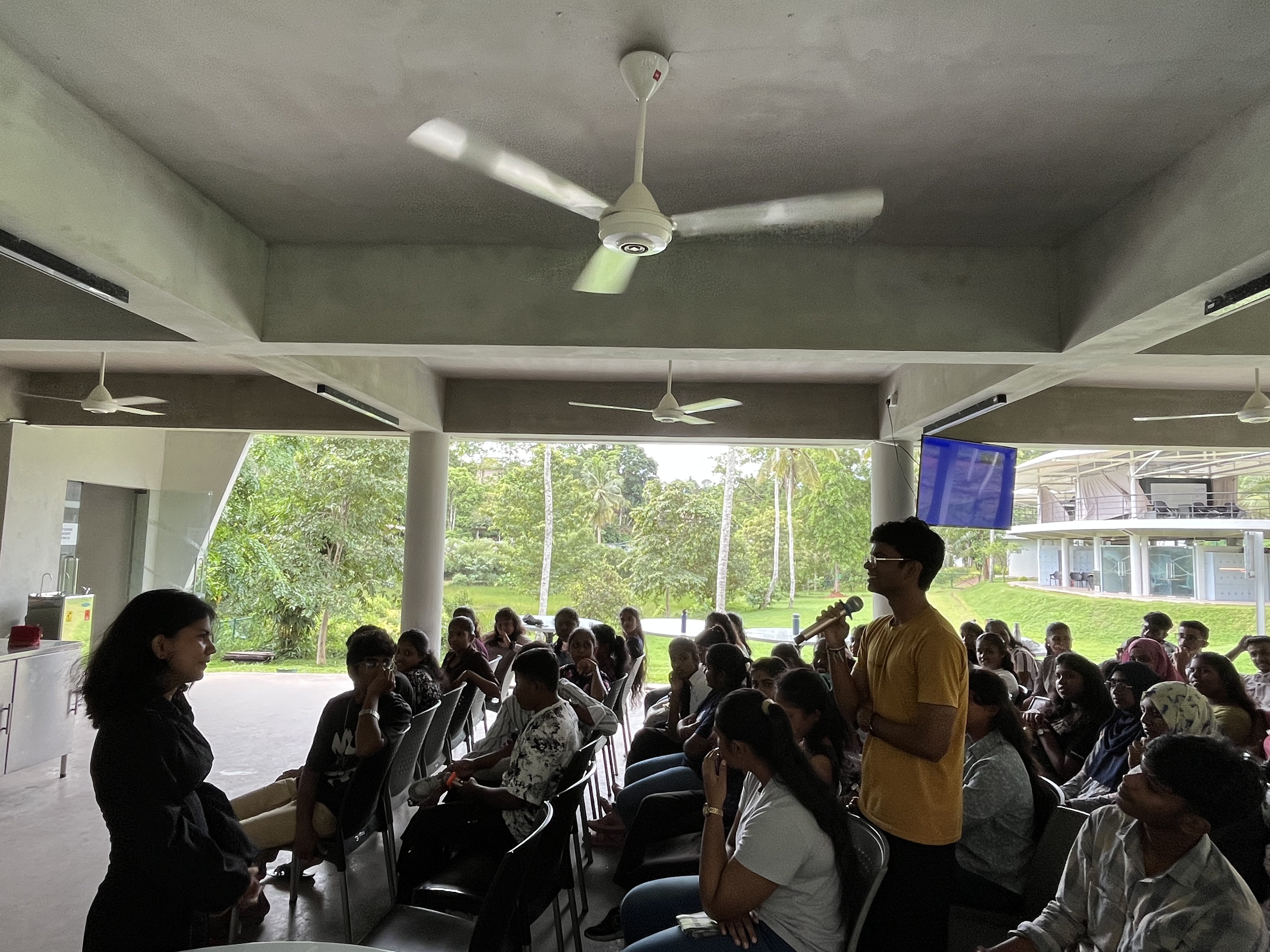
Towards the end we got everyone, including Kiya, to share something from their own lives. Kiya went first, talking about how she taught herself to edit and create content using nothing but her phone, and how that turned into an actual career, despite people around her questioning what a girl was doing in editing. Esther switched to Tamil to speak directly to the Tamil speaking students, and even though I couldn’t follow what she said, you could see it land, the room got more interactive than it had been all day. Amelia talked about never quite fitting into a box growing up, always drawn to languages, making her own money along the way teaching, doing other students’ assignments, figuring it out as she went. Listen to yourself, she told them.
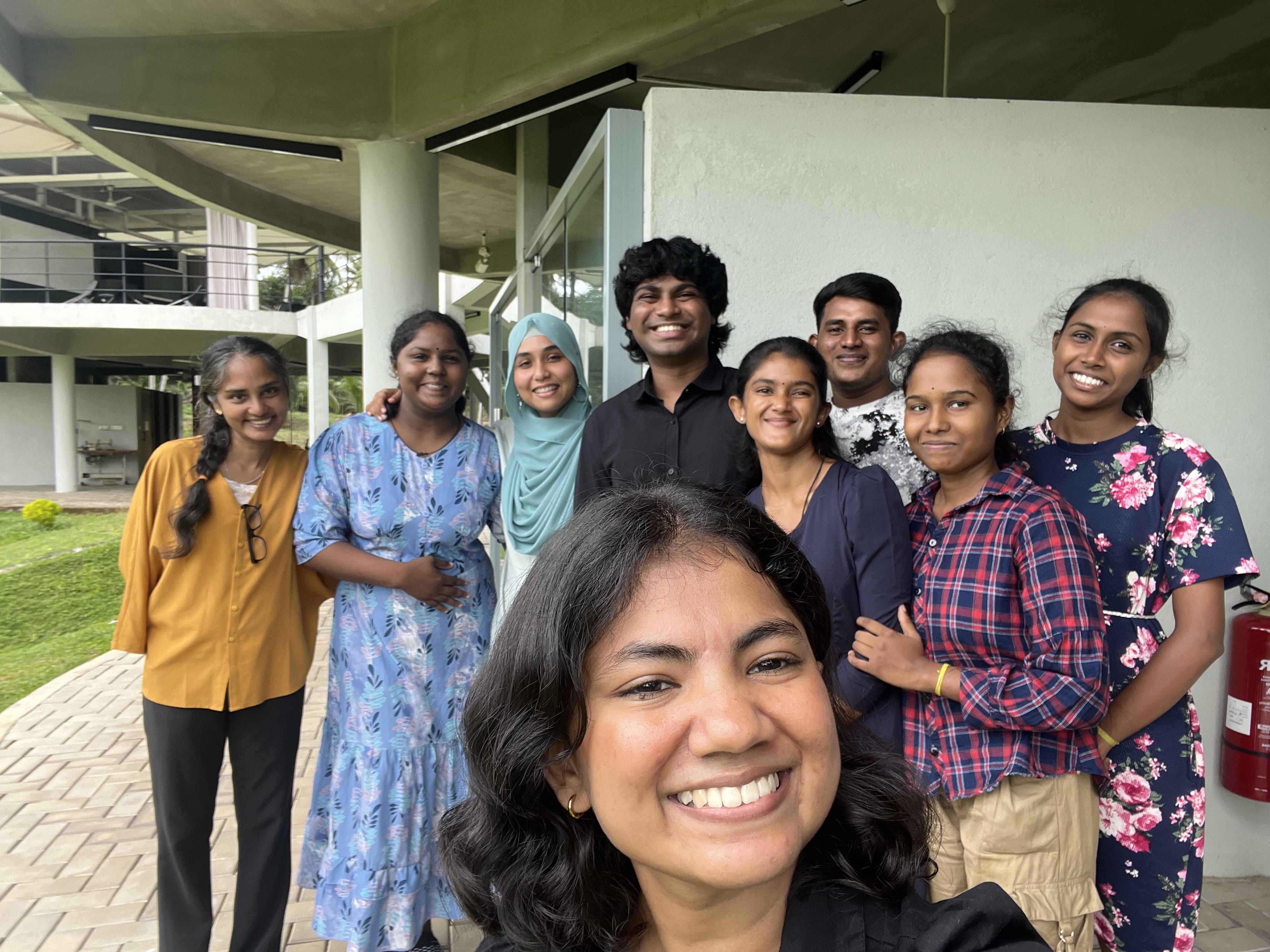
Everything I know about getting to where I wanted to go, I learned from people who took the time to share their own paths with me. There’s always a way, even if it doesn’t look like the one everyone else is taking. I hope today did that for at least one student here. A Saturday well spent.