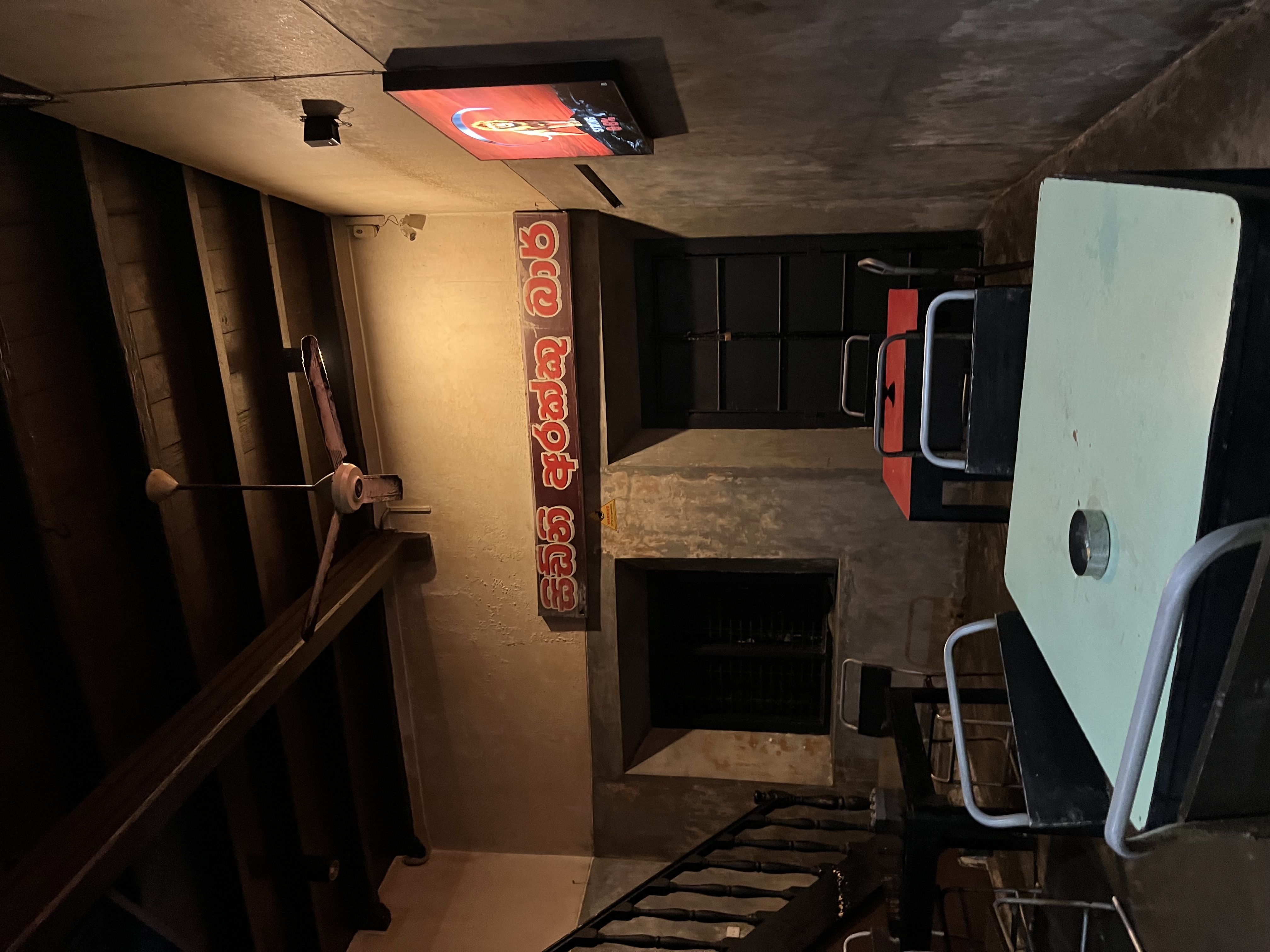
The only other customer was smoking at a corner table. Late fifties, a Gold Leaf between his fingers, speaking into his phone in Sinhala. On a Friday night in Colombo every bar would be packed by now, music, crowds, the whole thing. This place had none of that. Just one man, some rain, and a lot of quiet, while outside, somewhere down the street, you could hear the tak-a-tak of kottu being made.
I had gotten here on a bus. Makumbura to Galle, almost two hours down the highway. May had been a difficult month, hectic and directionless at the same time, the kind of busy where you’re not sure where things are heading. The last few nights I’d gone to sleep at 4am, searching for answers that didn’t come. And somewhere in between all of that I kept wondering whether to give up the flat in Colombo, the one I’d just repainted, the one that had quietly marked a year of living there alone, pack everything and just move, city to city, and maybe even country to country like a nomad cheaply. I run a startup and do most of it remotely, so why couldn’t I? But then there was the other thought, the one about not having anywhere to go home to. So before I did something I couldn’t undo, I packed two sets of clothes and my MacBook and got on a bus south. No plan, just somewhere that wasn’t where I was.
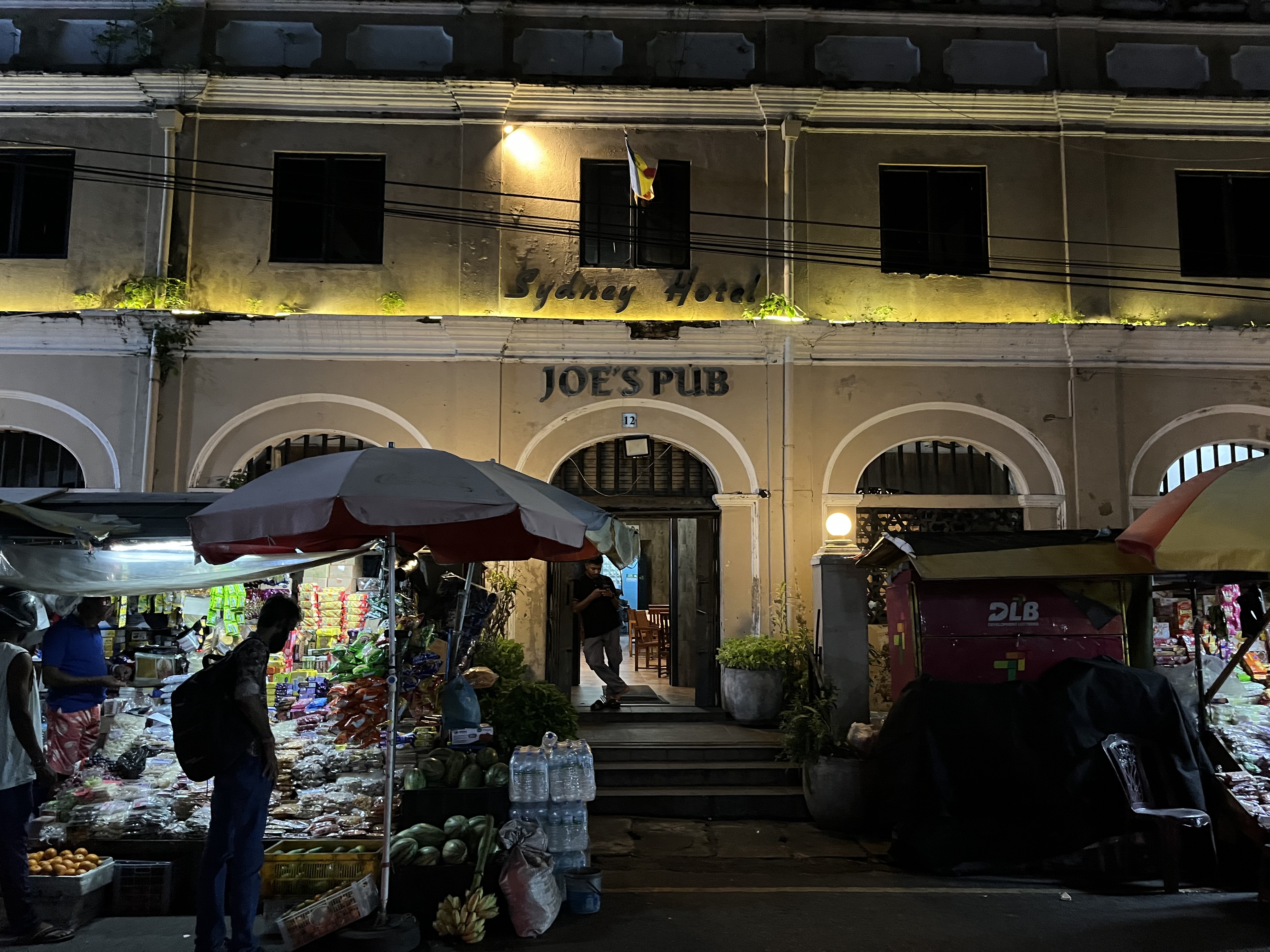
I hadn’t planned on going back to Sydney Bar, Joe’s Pub inside the Sydney Hotel, not the one in Australia. But after I got off the bus and started walking, the thought just came and I went with it. I’d been once before, with a group of friends. It sits behind the Galle bus station, not inside it, but tucked behind it in what looks like an old building that’s been there longer than most things around it. The cricketer Sangakkara once did an arrack shot here, there’s even a video of it somewhere. It has two sides, two entrances really. One is a fairly normal bar, the kind of place you can sit and have a drink. The other is something different entirely.
I walked into the normal side first, inspired loosely by Bourdain, the idea of going where locals go and seeing what’s there. The smoking man was still at his corner table. I ordered a lager and found a seat and watched.
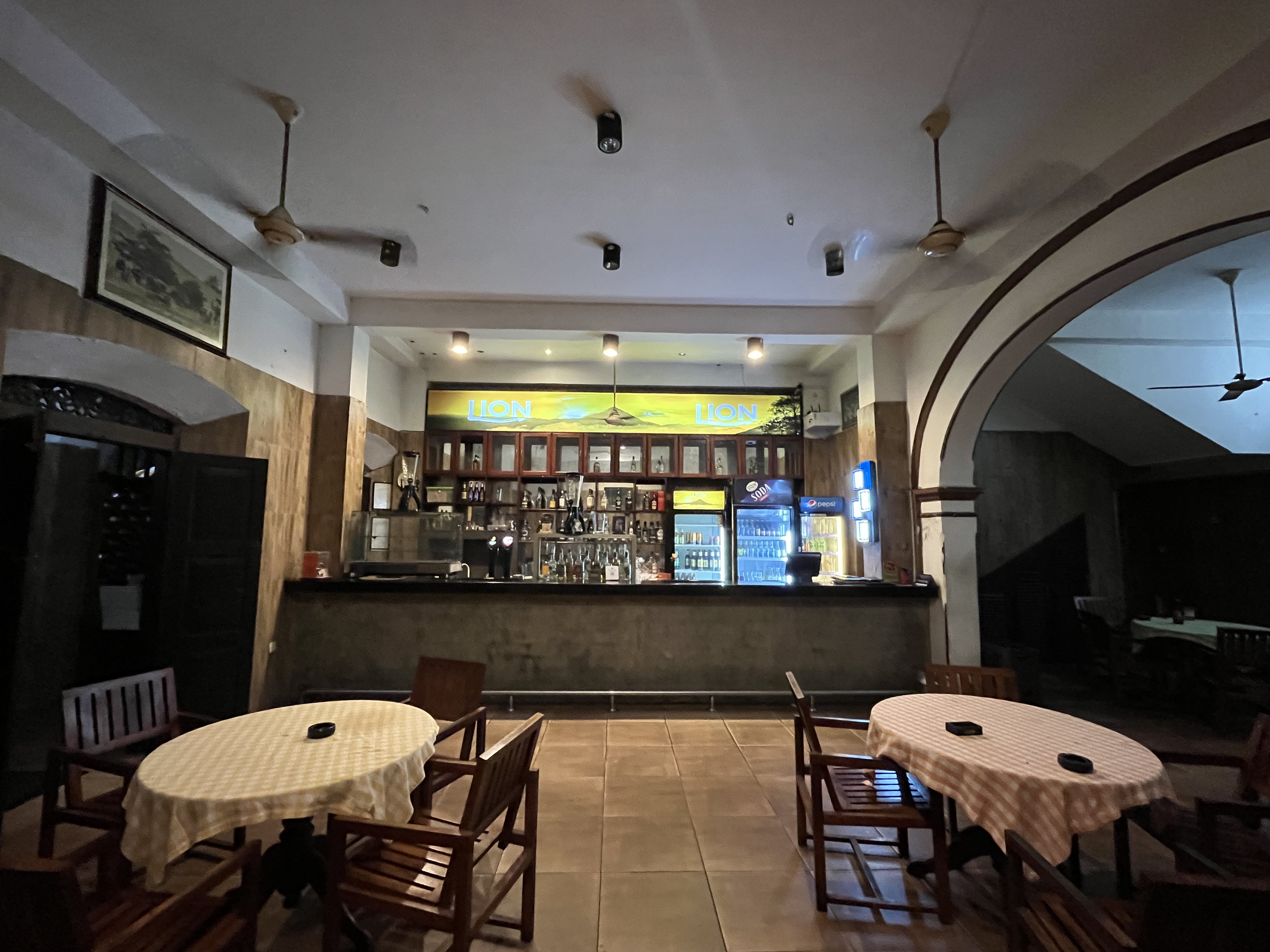
At some point I got hungry and flagged down the waiter, an older guy with curly hair who looked like he was part of a band at some point, and asked about food. The kitchen had closed early, he said. The weekend was Vesak Poya, the day before had been Eid al-Adha, and they were cleaning up and winding down. I finished my drink and headed out.
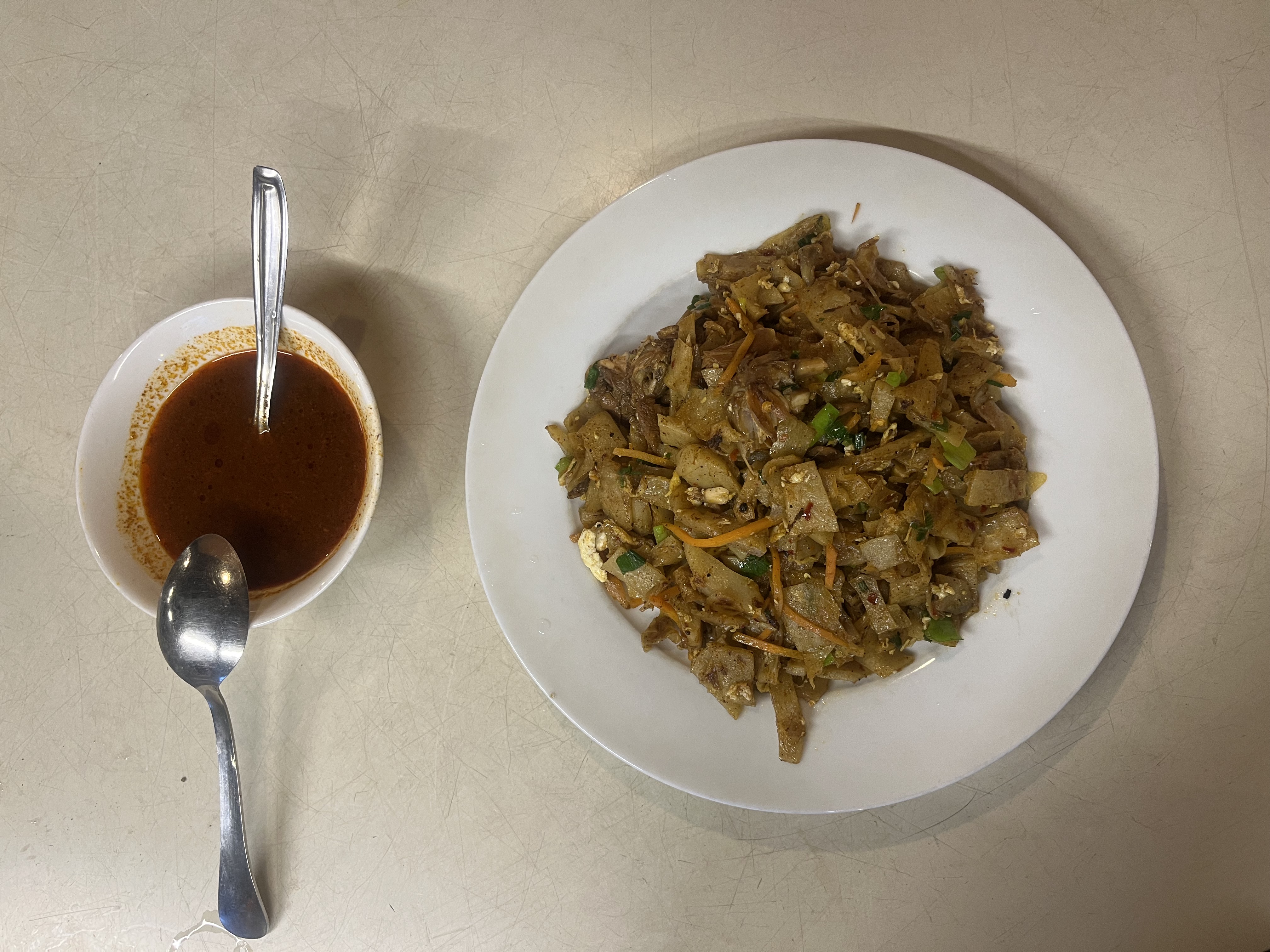
I found a kottu spot close by. Before I ordered anything I leaned over to the uncle at the counter and asked, “card thiyenawada?” — do you take card? He said yes. The place was loud and by the stains on the floor tiles you could tell they hadn’t been cleaned in a very long time. In the corner a heavyset woman sat with the air of someone who owned the place, speaking loudly to the man at the counter and the other woman who was sweeping the floor, going over something that sounded like end of day numbers. The kottu came. It was what I expected, and I hadn’t expected too much from it anyway.
I walked back to Sydney Bar and went in through the other entrance. Nothing about this side resembled the other. A caged counter, silver painted metal bars separating the bartender from the outside, and a steady rotation of people who came in, had their shot of ගල් and left. Security guards between shifts. Men who spent their waking hours doing physical labour. Corporate workers stopping in on the way home. All of them standing at the same counter, drinking the same thing, DCSL අති විශේෂ අරක්කු, Extra Special Arrack, a shot for Rs. 300, a double for Rs. 600.
Further back, I watched a man at the counter. Shirt and black pants, corporate by the look of him, leaning over his ගල් and a paper bag of murukku. The bag looked like it had been made from old newspaper or exam paper. He was talking to the bartender uncle about how Sri Lankans don’t move anymore, how it’s all led to high cholesterol, about television and phones and what it’s all doing to people. The uncle was nodding, asking questions. The younger man educating the older one about the modern world, both of them standing in a place that felt untouched by it.
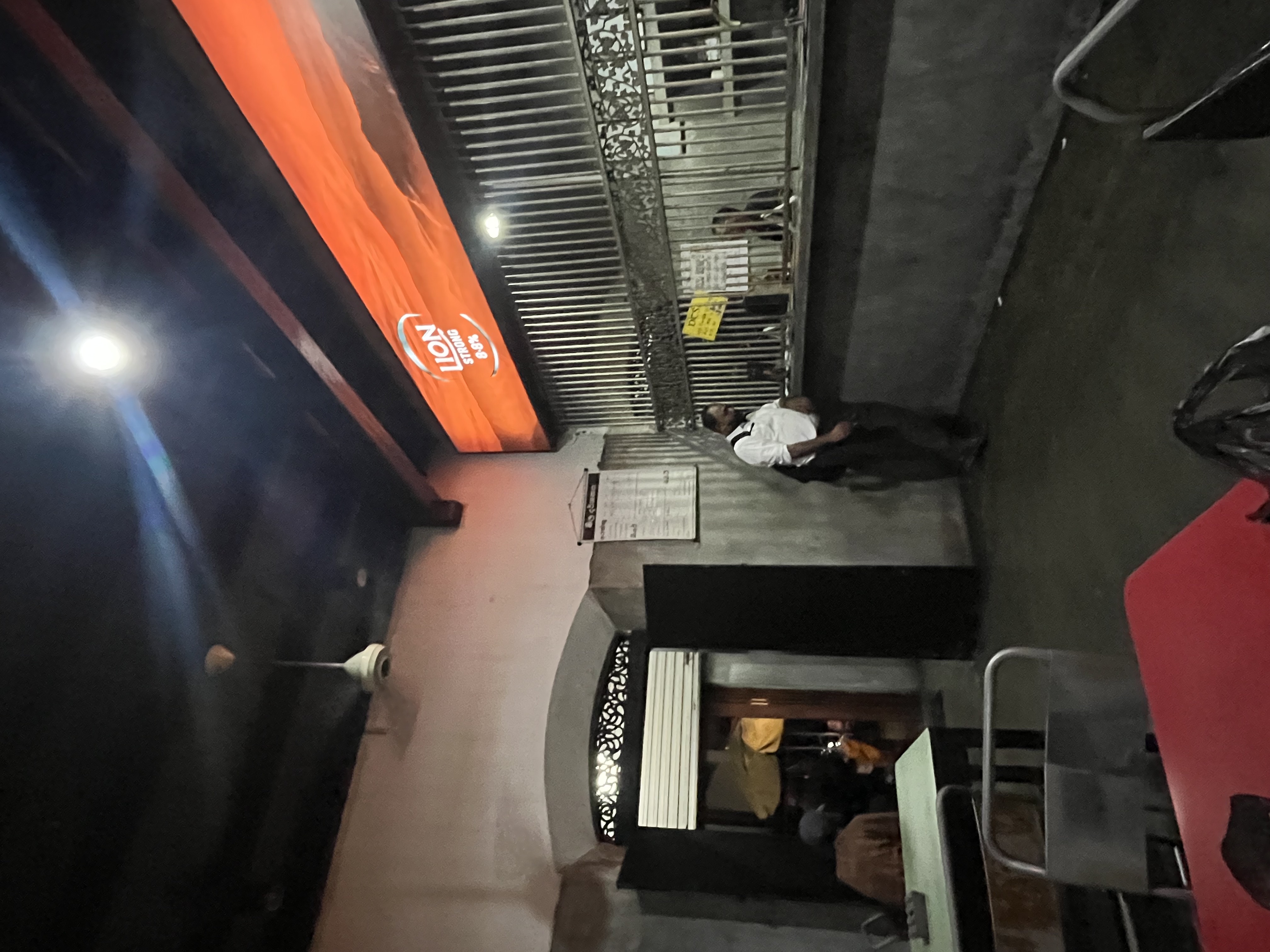
When the corporate guy left, he said his farewell with a “gihin ennam” — see you later — and walked out. I moved to the counter. I had a couple of chewing gums on me and offered one over and we started talking. The bartender uncle was around sixty, easy to chat with. The bar opens at 11am, he told me, and the license allows them to keep the doors open until 10pm sharp. A minute late and there’s trouble. I asked about the owner. A man from Colombo, he said, a Christian. Comes by sometimes but doesn’t need to. He’s probably watching right now, the uncle said, nodding toward the CCTV in the corner. That’s how businesses are run these days. He asked me where I was from and what I did. I paused for a second and lied that I worked in accounting at an office in Colombo. It came out before I thought about it, just something to say, a way to fit into the conversation without having to explain too much. We talked for a while after that, about things I don’t fully remember now. With about fifteen minutes to closing he kept glancing at the clock on the grey wall. I figured it was time. I said my goodbyes and headed out.
I called a Pickme, the local competitor of Uber, and a short man appeared on a bike. It was a fifteen minute ride to my friend’s place where I was crashing for the night. We got talking. He worked at the army camp in Galle, wasn’t originally from around here, was renting. One kid, and his wife was still at university. The road ran along the coast and to our right the dark ocean moved in the slight rain and wind as we rode through it.
I asked him about rent in Galle, how army ranks work, what the salaries were like. He said he was making around 115k, that there were perks. I asked what the highest rank was. Army commander, he said, you work your way up through the years. And at that level, “English thiyenawa nam hari” — you need to have English. Being the guy with an English education startup, I hadn’t expected to hear that out here. He asked how old I was. “Twenty four,” I said. Another lie, though not one I felt too bad about. I’d been in enough conversations where saying twenty one changed something, the direction shifted, people got quieter, like they’d decided something about you. I was never sure why, but it had happened enough times. I’d read Sam Harris’s Lying at some point, a book that makes the case for telling the truth in every situation, no exceptions. The thought crossed my mind for a second, and then the conversation moved on. He told me the army stops taking people after 26, you need the “morale eka thiyenna one” — the drive — when you’re young, and you’re out by forty. Towards the end of the ride, dropping me off, he said you have my number neh, let me know if you want to join the army. I said “thanks machan, gihin ennam” — thanks bro, see you later — got off the bike and walked away.